Maintainability of LLM-Generated Code and Student’s Understanding
DOI:
https://doi.org/10.63512/sustjst.2025.2003Keywords:
LLMs, CS education, Software maintainability, Program comprehension, Static analysisAbstract
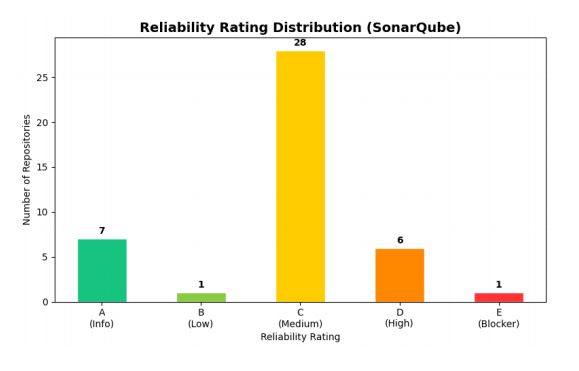
Large Language Models (LLMs) are frequently used by students for programming assignments and capstone projects, yet their impacts on software maintainability and students’ ability to explain and maintain their own codebases remain unclear in authentic educational settings. This study examines maintainability and code understanding as jointly examined outcomes in an undergraduate Web Technology course. We analyze 48 student GitHub repositories (3,043 commits) using commit-level SonarQube static analysis to track maintainability and risk-relevant indicators, including code smells, SQALE technical-debt measures, duplication, complexity, and security/reliability ratings. We complement repository-level measurements with student explainability (understanding) scores on a 0–10 scale (n = 104), reflecting students’ ability to explain code segments from their projects. Across repositories, 5/48 (10.4%) failed the SonarQube quality gate. Security and reliability concerns were concentrated in a subset of projects. Our investigation exhibits 9/48 (18.75%) blocker-level security status, and 2/48 (4.17%) high security issues. Whereas reliability issues included 2/48 (4.17%) with blocker-level reliability and 6/48 (12.5%) with high reliability issues, while 32/48 (66.67%) fell in the medium range. In addition, security hotspots requiring review were prevalent (42 repositories). On the learning side, 33% of students scored ≤ 5/10, indicating limited ability to explain their code, and approximately 2% could not provide a meaningful explanation. Overall, the results suggest that a notable fraction of student projects retain maintainability and security/reliability risks, and that a non-trivial subset of students demonstrate low explainability of their own code. These findings motivate instructional scaffolding and assessment practices that emphasize code review, refactoring, and explanation alongside functional correctness, especially in courses where LLM-based tools are available.
Downloads
Published
Issue
Section
License
Copyright (c) 2026 SUST Journal of Science and Technology (SUST JST)

This work is licensed under a Creative Commons Attribution 4.0 International License.