Pan-Cancer Classification in Clinical Applications: A Comprehensive Analysis using Machine Learning Models
DOI:
https://doi.org/10.63512/sustjst.2025.2002Keywords:
Machine Learning, Pan-Cancer ClassificationAbstract
Cancer affects millions of people worldwide, and accurate, timely classification of cancer type is closely tied to treatment selection and patient outcomes — particularly in metastatic disease or Cancer of Unknown Primary, where identifying the tissue of origin directly informs site specific treatment. Multiple clinical and genomic variables, including mutation count, tumor stage, diagnosis age, tumor purity, smoking status and sex are individually associated with cancer behavior, but whether their combined use improves classification across a broad range of cancer types — rather than within a single cancer type, as in most prior work — has rarely been tested directly. This study evaluates four machine learning classifiers — Random Forest, Extreme Gradient Boosting, Support Vector Machine, and Artificial Neural Network — on a clinical pancancer dataset spanning 20 cancer types (6,110 patients; 1,222 held out for testing), using ten routinely available clinical and summary genomic covariates. XGBoost achieved the strongest
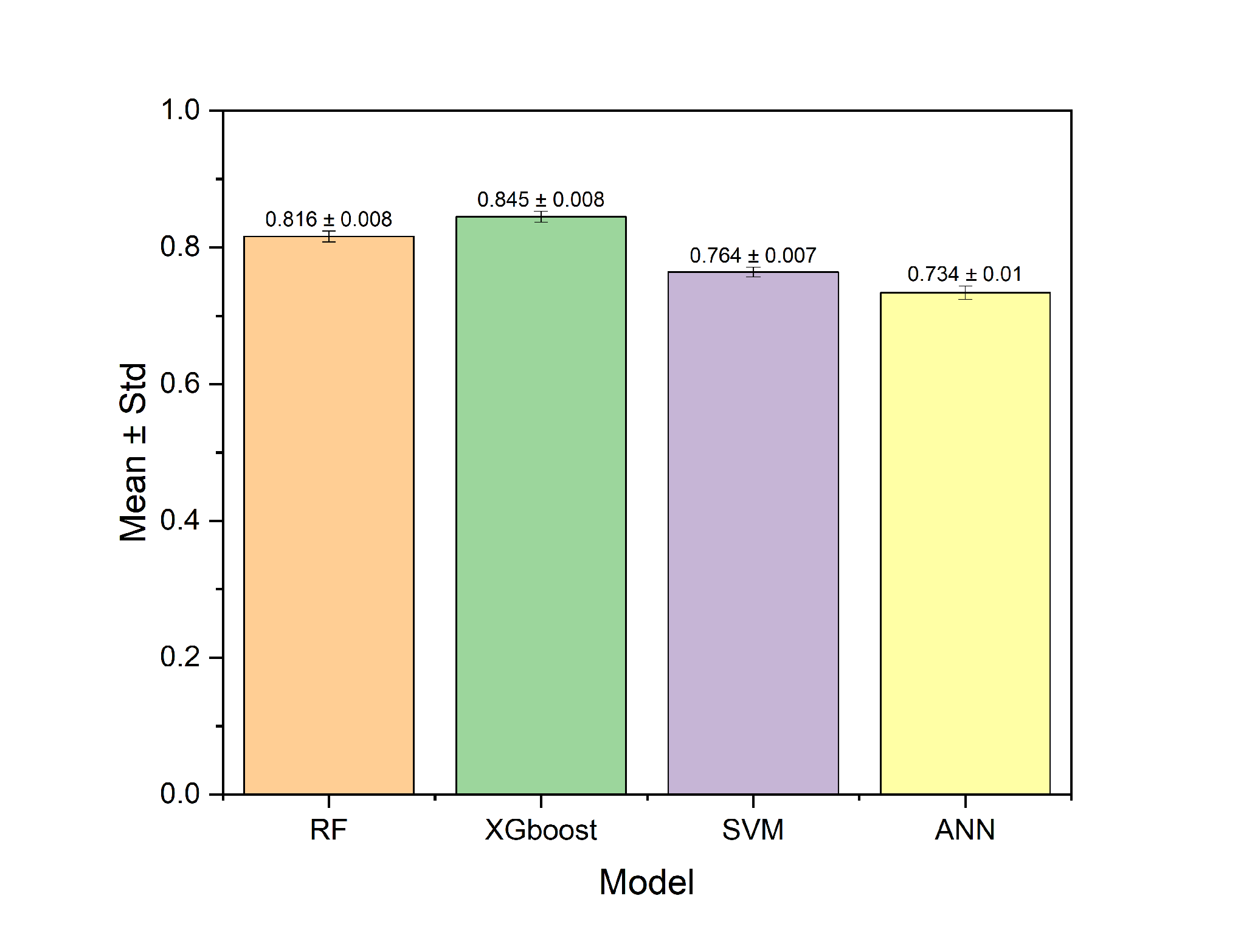
performance (accuracy 87.0%, 95% CI: 85.0–88.8%; F1-score 0.869; ROC AUC 0.993), with Random Forest close behind; both outperformed SVM and ANN by a margin confirmed as statistically significant through 5-fold cross-validation. Rather than assuming that the selected variables jointly contribute to classification performance, this study tests that claim directly using permutation feature importance, finding that multiple features contribute distinct, non-redundant predictive value across all four models. This performance is broadly comparable to prior multi-class pancancer classification studies covering fewer cancer types (13–14) while relying on substantially higher-dimensional genomic inputs, suggesting that a smaller, more clinically accessible feature set can support classification across a wider range of cancer types. These results support the feasibility of clinical-data-driven pan-cancer classification as a direction for future decision-support research; external validation on independent, multi-institutional cohorts is required before any clinical application.
Downloads
Published
Issue
Section
License
Copyright (c) 2026 SUST Journal of Science and Technology (SUST JST)

This work is licensed under a Creative Commons Attribution 4.0 International License.